Long Live the Weeds
Related








Long Live the Weeds
Matthew 13:24-30, 36-43
Jesus offers us a botany lesson. We are not always that good at identifying various species of plants. There’s a Smart Phone app that allows us to take a picture of a plant or a tree or a flower and the app identifies the plant. Lacking Smart Phone technology for telling weeds from wheat among humans, we struggle.
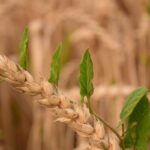
There are weeds in the garden of God. The story sounds weird in farm country because it says to let the weeds grow with the wheat. My first full-time pastorate was in a farming community. One of the farmers planted his soybeans every spring. He then left his crop and did nothing. No fertilizer. No weed killing chemicals. No crop-dusting plane flying over his crop. Weeds and beans grew together until harvest and then we went into the fields and harvested everything. He took his soybeans to market and received a reduction in price because of all the weeds mixed in, but he never complained and he farmed this way his entire life. He is like the only actual representation I have ever witnessed of a parable of Jesus.
Well, weed pullers make a mistake. They think they are Ph.D.’s in botany. They assume they are God’s judges. They assume they are in charge. Pull the weeds. That’s their mantra. Pull the weeds. Matthew’s editors were a bunch of weed pullers. They wanted to rip out the weeds and make the church a place for the pure.
But beware: Weed pullers assume a power they don’t possess. They claim an authority that belongs only to God. They are painfully unaware of how “fragile” their claims and positions are and how deeply implicated they are in histories of violence.
Have we forgotten that a bunch of weed killers ripped away the life of Jesus? You remember the story:
“A shoot shall come out from the stock of Jesse,
and a branch shall grow out of his roots.
The spirit of the Lord shall rest on him,
the spirit of wisdom and understanding,
the spirit of counsel and might,
the spirit of knowledge and the fear of the Lord.
His delight shall be in the fear of the Lord” (Isaiah 11:1 – 3)
And the weed killers said he was a glutton and a drunkard. The weed killers said he was a friend of sinners. The weed killers said he was a blasphemer and the devil. And they crucified him. If I were you, I’d be careful before I claimed that someone was a weed.
We should have known better. Our mythos, lest we forget, teaches us that we are not good with gardens. God gave us one back in the mists of civilization – an imagined paradise known as Eden. First, we ate the wrong fruit. We frolicked there, but we were sloppy, talked to a snake, got our brains crossways with suspicion and conspiracy theories, lost the entire garden. Went bankrupt. Lost it forever. Then there’s this in Isaiah. God gave us his people a garden and in exasperation finally cried, “What more could I have done with my garden then I have done?” (Isaiah 5).
We should we more careful when we start inspecting the fruit in God’s Garden.
The Garden of Eden never made much sense to me until I read Kenneth Burke. He taught me that Adam and Eve acquired Knowledge by eating the forbidden fruit and that knowledge was language, in particular the language of the “Negative.” With the Fall, humanity “invented the Negative.” Expelled from the garden, the long dialectic of History began and that history is one of grasping for power.
Some Christians have a starring role in the story: “Master, do you want us to gather up the weeds in a pile and burn them?” Someone is always demanding that we get rid of the undesirables. A senator from Mississippi, back in the day, campaigned to send all African Americans back to Africa. “Put them on a boat and send them back.” Senator McCarthy crusaded to rid the country of communists. He said, “I’m going to pull the weeds out of this country. And how long will we have to suffer the foolish insistence that gays are somehow weeds? Gays are not “weeds;” they are precious flowers in the God’s garden. They are the majority of the people who make up the creative class and any downtown that wants to grow and flourish should have a marketing campaign to attract gays to live and work in the city.
New Testament scholar, Richard Hays tells us, “The parable of the wheat and the weeds and its interpretation suggest that there was an active debate in Matthew’s community concerning whether the church should seek to be a community of the pure or whether it should accept a more ambiguous status of a [mixture of saints and sinners] awaiting the final judgment” (Richard B. Hays, The Moral Vision of the New Testament).
What’s your take on the matter? Purity or a mixture of saints and sinners? This is the question that fuels all racism. Once you start pulling weeds, you are on the road to fascism. This is how people start believing in a pure race of white people and why Americans join hate groups and become white nationalists. “In the United States today, angry, straight White men are mobilizing political affect to magnify the spectacle of threat facing their sexist values.”
How hard can it be to leave the weeds alone? This is not exactly a high-level ethical command. Let the weeds grow with the wheat and God will decide. Let me show you something here in the gospel. In verses 24 – 30 we see the work of an editor, a second generation Matthew. And he is not a happy camper with this leve the weeds alone business. I’m saying that a second-generation editor of Matthew, disturbed by Jesus’ grace toward weeds, bared his animal teeth and amended the parable and gave it back harsh judgment of hell. These two interpretations exist side by side in the gospel, and some Christians are determined to hang on to hell no matter what. Some Christians will even mess with the message of the gospel to justify their own brand of weed pulling.
For many years there was a weed killer marketed as Roundup. Roundup is the brand name of a systemic, broad-spectrum glyphosate-based herbicide originally produced by Monsanto, which Bayer acquired in 2018. Let me tell you, Roundup kills everything it touches. Weeds, grass, flowers, even your young trees. The name has a ring to it. Round up all the “weeds. Roundup is now linked to cancer. Roundup even kills some humans. You just never know what you will start once you put the church in the weed killing business.
What does Jesus say? Of all things, Jesus says, “Leave the weeds alone.” Did you miss that? LEAVE THE WEEDS ALONE. Some folks can’t believe it. Isn’t there such a thing as right and wrong, good and evil, true and false? We need to take a stand, draw the line, pull some weeds. But the boss says, “Leave the weeds alone.” But they are ugly, they are cluttering the garden. “Leave the weeds alone.” Do you see that in God’s garden we are not the experts? We can’t tell weed from wheat.
Walker Percy raises questions that evangelicals need to answer in Love in the Ruins:
What a bad joke: God saying, here it is, the new Eden, and it is yours, because you’re the apple of my eye, because you the lordly Westerners the fierce Caucasian-Gentile-Visigoths, believed in me and in the outlandish Jewish Event even though you were nowhere near it and had to hear the news of it from strangers. But you believed and so I gave it all to you, gave you Israel and Greece and science and art and the lordship of the earth, and finally even gave you the new world that I blessed for you. And all you had to do was pass one little test, which was surely child’s play for you because you had already passed the big one. One little test: here’s a helpless man in Africa, all you had to do is not violate him. That’s all.
One little test: you flunk!
God, was it always the black business, ow, just as in 1883, 1783, 1683, and hasn’t it always been that ever since the first tough God-believing, Christ-haunted cunning violent rapacious Visigoth-Western-Gentile first set foot here with the first black man.
God tests his people as he tested Abraham and we keep flunking the divine exams. God keeps sending us allies and we keep mistaking them as weeds: women, gays, immigrants, persons of color. We flunk. We treat God’s gifts as weeds. We flunk.
David Livingston Smith traces our failing ways in his powerful Less than Human: Why We Demean, Enslave, and Exterminate Others. He outlines the psychological warfare that goes on in times of war. People refer to their enemies as dung flies, lizards, and worms. Smith says, “A whole group of people is represented as less than human, as a prelude and accompaniment to extreme violence. It’s tempting to see reference to the subaltern other as mere talk, as nothing more than degrading metaphor.”
An Australian general told his troops, during WWWII, “Your enemy is a curious race—a cross between a human being and an ape.… You know that we have to exterminate these vermin if we and our families are to live.…”
Jesus puts his finger on the human propensity to treat fellow humans as weeds in God’s gardens, weeds to be exterminated. This is the dark, real side of the parable. It exposes us and our propensity for self-righteous violence.
We want to avert our eyes, duck our heads, and get away from such carnage. But there is good news. We can change. Instead of doing the grunt work of pulling weeds, we can be in the cultivating of God’s Garden with the good news of Jesus. The fields are white unto harvest and Jesus invites us to help gather the harvest. It beats weed pulling, wouldn’t you agree?
Let’s go home with some great poetry in our minds:
“What would the world be, once bereft
Of wet and of wildness? Let them be left,
O let them be left, wildness and wet;
Long live the weeds and the wilderness yet.” (Gerard Manley Hopkins)