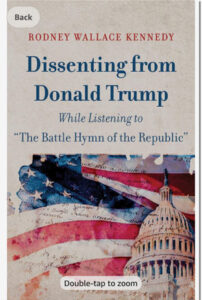
American democracy has long been described as an experiment—bold, fragile, and dependent on the character of its citizens. In recent years, many have begun asking a pressing question: Is American democracy in danger? For progressive Christian pastor, writer, and speaker Rodney Wallace Kennedy, the answer requires both political awareness and theological depth.
This is not a question rooted in panic. It is rooted in discernment. Democracy does not collapse overnight; it weakens gradually when institutions are strained, truth is distorted, and power goes unchecked. From a Christian perspective, defending constitutional democracy is not about partisan loyalty. It is about moral responsibility.
 Democracy in Danger: Recognizing the Warning Signs
Democracy thrives when institutions are respected and citizens remain engaged. It falters when trust erodes and political power begins to concentrate rather than disperse.
The framers of the United States Constitution understood the volatility of unchecked authority. They designed a system built on separation of powers, checks and balances, and federalism precisely because they distrusted concentrated power. Their vision was not naïve optimism about human goodness. It was structured realism about human ambition.
When observers ask whether democracy is in danger, they often point to several measurable pressures:
- Institutional Strain
When executive authority expands beyond constitutional limits or when legislative and judicial roles are weakened, the equilibrium of democracy shifts. The system depends on tension between branches—not submission. - Political Polarization
Deep divisions are not new in American history. However, when disagreement becomes dehumanization, democracy suffers. A constitutional system assumes debate. It does not survive contempt. - Erosion of Shared Truth
Democracy depends on a shared factual foundation. When misinformation spreads widely, citizens lose the ability to deliberate meaningfully about public policy. - Religious-Political Fusion
One of the most significant theological concerns for Kennedy is the merging of religious identity with political allegiance. Christianity historically flourishes when it maintains prophetic distance from state power rather than aligning itself uncritically with it.
These conditions do not necessarily signal collapse. They do, however, signal vulnerability.
Is American Democracy Under Threat?
The question “Is American democracy under threat?” demands nuance. The United States retains functioning elections, constitutional courts, and a robust civil society. Yet democracies rarely deteriorate through dramatic coups alone. They often erode through normalization—when behavior that once seemed unacceptable becomes routine.
Kennedy, who has openly dissented from the politics of Donald Trump, frames the issue as a theological concern rather than a partisan grievance. The heart of the matter is not a single political figure. It is the broader temptation toward authoritarian impulses, personality-driven politics, and the weakening of constitutional norms.
A democracy is under threat whenever:
- Loyalty to individuals outweighs loyalty to constitutional principles.
- Institutions are treated as obstacles rather than safeguards.
- Political rhetoric undermines confidence in electoral processes without evidence.
- Citizens disengage from civic participation out of fatigue or cynicism.
Threat does not equal inevitability. Democratic systems possess resilience. They adapt. They correct. But they require vigilance.
A Christian Defense of Constitutional Democracy
Why should Christians care deeply about constitutional democracy?
The answer begins in theology.
Human Fallibility and Limited Power
Christian doctrine affirms human fallibility. The biblical understanding of sin acknowledges that no leader, party, or institution is immune to corruption. A constitutional system that distributes power reflects this theological realism.
Checks and balances mirror a Christian anthropology that recognizes both human potential and human weakness. Limited government aligns with the biblical caution against concentrated authority.
Protection of Conscience and Religious Liberty
Constitutional democracy safeguards freedoms of speech, assembly, and worship. These are not abstract ideals. They create space for prophetic witness.
The freedom to preach, dissent, and critique public policy depends upon constitutional protections. Without such guarantees, religious communities risk either silence or state control.
The Biblical Witness Against Idolatry of Power
Throughout Scripture, prophets confront kings. Power is repeatedly held accountable to justice. The Christian tradition does not sanctify political authority; it evaluates it.
When Christianity becomes fused with nationalism or party ideology, faith risks becoming a tool of power rather than a voice of conscience. A Christian defense of democracy therefore includes defending the structural limits that prevent political idolatry.
Loving One’s Neighbor in Public Life
Democracy requires shared civic space. It demands compromise, listening, and peaceful disagreement. From a Christian perspective, loving one’s neighbor includes protecting that neighbor’s right to vote, speak, and participate.
Defending constitutional democracy is not an act of blind patriotism. It is an act of civic stewardship.
Democracy and the Role of the Church
Kennedy describes himself as a progressive Christian and political dissident, but his broader concern centers on integrity rather than ideology. The church must retain the freedom to speak prophetically. That freedom depends on constitutional order.
When churches become extensions of political movements, they risk losing moral credibility. When they retreat entirely from public discourse, they abandon their prophetic responsibility.
The proper posture is engagement without captivity.
A healthy democracy allows the church to:
- Critique injustice.
- Advocate for marginalized communities.
- Participate in civic debate.
- Maintain independence from state power.
This balance protects both church and state from mutual corruption.
The Resilience of American Democracy
History reveals that American democracy has endured severe tests—civil war, economic depression, social upheaval. Each crisis exposed weaknesses, but each also demonstrated institutional durability.
The continued vitality of democracy depends on several factors:
- Citizens committed to constitutional norms.
- Leaders who respect legal boundaries.
- Media and civic institutions that prioritize truth.
- Faith communities willing to defend principles over personalities.
- Democracy is not self-sustaining. It requires cultivation. It demands moral seriousness.
Faithful Citizenship in a Fragile System
So, is American democracy in danger?
It faces genuine pressures. Polarization, misinformation, and institutional strain create vulnerability. Yet danger does not dictate destiny.
A Christian defense of constitutional democracy rests on theological convictions: human fallibility, the need for limited power, the protection of conscience, and the call to love neighbor. These convictions align naturally with the constitutional framework established in 1787.
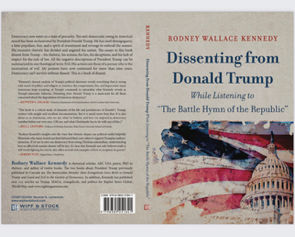 For Rodney Wallace Kennedy, defending democracy is not about elevating a nation above critique. It is about preserving the conditions under which truth can be spoken, conscience can operate freely, and justice can be pursued peacefully.
Constitutional democracy is not sacred. But it is a system that restrains power and protects liberty. From a Christian perspective, those protections matter deeply.
Democracy’s future will depend less on alarm and more on engagement—less on outrage and more on integrity. Faithful citizenship requires vigilance, humility, and courage.
American democracy may face strain, but its survival ultimately rests in the hands of citizens willing to defend constitutional principles—not for partisan gain, but for the common good.