A Pacifist Response to Killings in Minnesota
The discussion is couched in the Ten Commandments and the Sermon on the Mount.
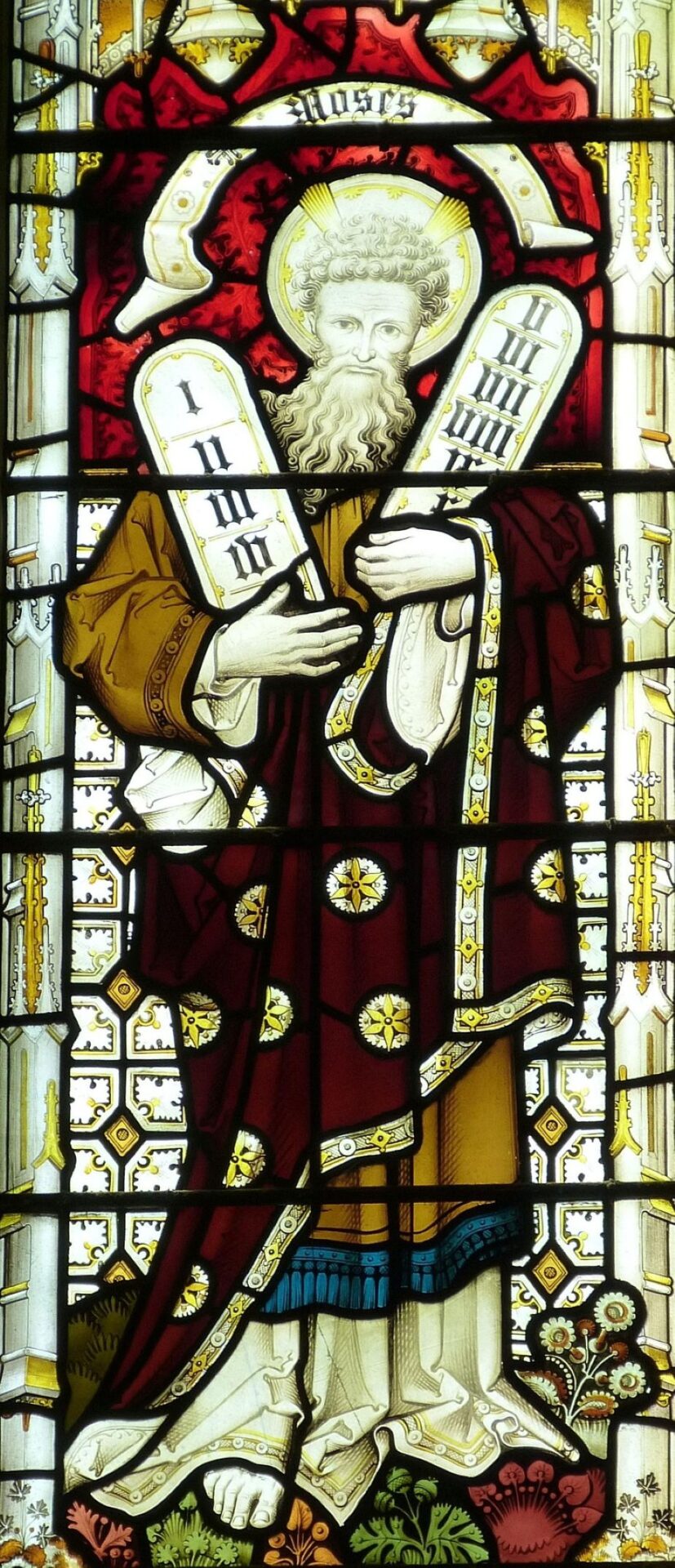
The Ten Words

thanks to PeterAA
The Nine Blessings
5 When Jesus[a] saw the crowds, he went up the mountain, and after he sat down, his disciples came to him. 2 And he began to speak and taught them, saying:
3 “Blessed are the poor in spirit, for theirs is the kingdom of heaven.
4 “Blessed are those who mourn, for they will be comforted.
5 “Blessed are the meek, for they will inherit the earth.
6 “Blessed are those who hunger and thirst for righteousness, for they will be filled.
7 “Blessed are the merciful, for they will receive mercy.
8 “Blessed are the pure in heart, for they will see God.
9 “Blessed are the peacemakers, for they will be called children of God.
10 “Blessed are those who are persecuted for the sake of righteousness, for theirs is the kingdom of heaven.
11 “Blessed are you when people revile you and persecute you and utter all kinds of evil against you falsely[b] on my account. 12 Rejoice and be glad, for your reward is great in heaven, for in the same way they persecuted the prophets who were before you.
Every aspect of the killing of Renee Good and Alex Pretti has been dissected and analyzed from every conceivable angle. Perhaps this is presumptuous to suggest one more look unrelated to all the ink spilled to condemn or justify the actions of all parties involved. Instead of Good and Pretti under the microscope, I propose to view the “What happened?” question with a telescope. Rather than a microscopic view, I propose a macroscopic view about what occurred.
Renee Good was shot and killed as she attempted to drive away from ICE agents. Alex Pretti was shot and killed by Border Patrol agents.
To kill or not to kill? Has this become the question? Of all the options a law officer has in the heat of a dispute, how did “Shoot to kill” move to the head of the line? The questions upset a usual presumption that most Americans see themselves as nonviolent with exceptions – defense of family, law and order, the nation, and etc. If we only argue about exceptions, we are all pacifists in most cases. As a people insisting we are not violent, we assume the users of violence – those who kill – bear the burden of proof. If this is close to the truth about our attitude toward violence, there is a small range of cases when violence might be argued as tragically necessary.
The wide scope of our problem becomes clear when the multitude of interpretations are applied to what sounds like a common ordinary command: “Thou shalt not kill” (Exodos 20:13). Our English translations are at odds over what God means in commanding us not to kill. The New Revised Standard Version reduces the scope of the commandment: “You shall not murder.”
When Gary Gilmore was executed in 1977, prior to the state of Utah killing him by firing squad, he twice tried to kill himself. Both times the state went to extraordinary measures to save his life. Will Campbell asked, “If it is in the best interest of the society for a man to be dead, what difference does it make if he does it himself? Unless, of course, we get some depraved gratification from doing it ourselves.”
The laws of the Old Testament, still a prominent part of evangelical understandings of killing, violence, and the power of the state, found 23 legitimate reasons to execute people. Among these offenses:
“You shall keep the Sabbath, because it is holy for you; everyone who profanes it shall be put to death” (Exodus 3114). No preacher would use this text on Super Bowl Sunday.
“Whoever curses father or mother shall be put to death” (Exodus 21:17).
Murder, rape, occult practices, bestiality, idolatry, child sacrifice, adultery, incest, male homosexual intercourse, blasphemy, perjury, and rebellion against parents are all causes for execution.
Thinking we are more moral and compassionate, our laws allow the death penalty in the case of murder. On the federal level, treason and espionage are death penalty offenses.
Still we argue about the death penalty. 60% of Americans favor the death penalty with 54% saying it is morally acceptable.
And we still argue about “just war”. Has there ever been a just war? WWII is usually the paradigm for supporters of just war theory.
Now they have killed Good and Pretti in Minnesota. Moral leaders among maga evangelicals, most of whom support executions, men such as Franklin Graham and Andrew Walker, insist the killings were justified. Evangelicals warm themselves by the fires of Romans 13:1 – 4, leave the rest to the state, and “go down” to their houses justified.
Still the issue of “killing anyone” for “any reason” has not been resolved. Good and Pretti were killed by law enforcement agents. A law enforcement official killing someone in the line of duty is still relatively rare in the USA. There are over 800,000 police officers in the US. In 2024, US police killed 1,365 people. Less than .002% of police were involved in killing someone in 2024.
Even if we continue to argue and bash each other on Facebook from now until Doom’s Day, Good and Pretti will not be “undead” or raised rom the dead. They are dead.
Our attitude about killing says a lot about our moral foundations. Are you an advocate of “just war?” Do you believe in the death penalty for violent crimes? Are you a pacifist?
By raising the issue of pacifism, I have played my own hand – all my cards face up on the table. I am a pacifist. I am obligated to “love my enemy” even if my enemy may still kill me. Like Stanley Hauerwas I think it important to testify to my pacifism because I am such a mean and potentially violent person. I need a people, a church, to help keep me faithful to my commitment.
I connect my pacifism to the Sermon on the Mount. “Blessed are the peacemakers” is my life text as I equate peacemaking with pacifism. Whether or not my pacifism produces good effects is irrelevant. Even as both sides continue to make arguments for or against the killings in Minnesota, they are desperate for a “win.” My commitment to pacifism doesn’t require winning; it only requires faithfulness. As Hauerwas insists, “If Jesus is Lord, we betray the hope that makes our commitment to nonviolence intelligible if we try to prove it.”
Ultimately, my faith in the resurrection overcomes all the arguments and positions. John Howard Yoder argued our faith in the resurrection sustains a “hope that cannot be destroyed by my failures or jeopardized by my inability to manipulate events.” A commitment to nonviolence doesn’t promise success.
Embracing the love that refuses to achieve the good through the disavowal of violence, I make a public stance, a witness. My rejection of the use of mechanical models of cause and effect to force history to move in what is assumed the right direction, means the promise of victory can only be found in the resurrection.
To bring up the resurrection in the middle of a knock-down fight over “killing,” will seem naïve and simplistic to some. Others will dismiss this as hopelessly idealistic. My prior commitment to pacifism requires my allegiance to the KJV translation of Exodus 20: 13 – “Thou shalt not kill.”