What would it have been like to be on a fishing trawler in the Atlantic in the perfect storm?
A “perfect storm” is a meteorological event aggravated by a rare combination of circumstances. The phrase became the title of a bestselling book (Sebastian Junger) in 1997 and in 2000 of a popular movie.
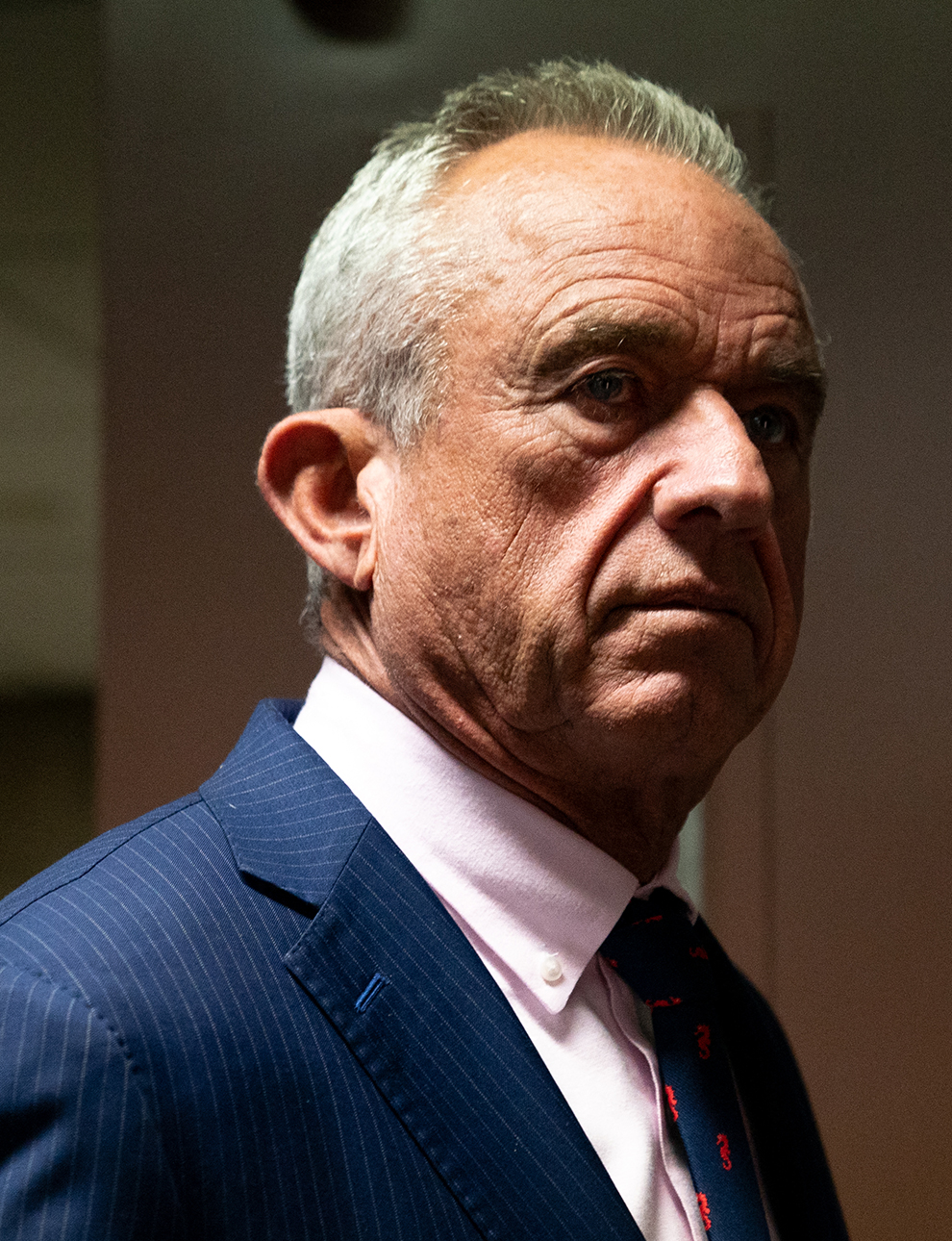
The story of the perfect storm is the best metaphor I have found for describing how Robert F. Kennedy Jr. has become the most powerful man in science. A series of events converged to create a political storm aggravated drastically by an exceptionally rare combination of circumstances.
A nightmare of democracy: Populism
The first exigency creating the perfect political storm is populism, a permanent part of U.S. democracy.
The dark underbelly of democracy cradles in its womb monsters from the deep. The people always are capable of great excesses. As James Kloppenberg puts it in Toward Democracy, “Democracy arose from violence and has never strayed far from it.”
There is no doubt Robert Kennedy is a beneficiary of the most extensive populist outbreak in our nation’s history. Paul Taggart says, “It is hard to understand politics in the United States without having some sense of populism.”
Populism trusts “the people” and their “common sense” while mistrusting experts and elitists with equal fervor. Imagine a world of certainty where evidence, facts, truth, research and scholarship don’t count. Imagine a world turned upside down where a populist preacher with a big smile and a black Bible has more credibility than a university filled with credentialed scientists.
“Kennedy has nothing on his resume to commend him as secretary of Health and Human Services.”
Only 1.8% of Americans have Ph.Ds. That leaves 98% as candidates for being suspicious of Ph.D.s. Evangelicals have pushed this mistrust for more than a century.
Other than belonging to America’s most storied political lineage, Kennedy has nothing on his resume to commend him as secretary of Health and Human Services. He is neither scientist, scholar, preacher or statesman, but politically he is the most powerful person in science.
He was appointed to his position in the Trump administration after leading the Children’s Health Defense — a group of vaccine critics.
The organization helps people fuse spirituality and science to make sense of their suffering. The anti-vaxxers argue evil forces are promoting vaccines for profit. They don’t seem far removed from Jehovah Witnesses refusing medical care for their sick children if a blood transfusion is involved.
Listen to enough anti-vax explanations and you recognize you are listening to the equivalent of evangelical testimonies. The anti-vax movement is a secular church and Kennedy its prophet. Science is not equipped to work in this artificial environment.
Science thrives in laboratories, research centers, universities, health centers — not in prayer meetings, revival meetings, testimonials and rallies.
Kennedy has sown the seeds of mistrust everywhere. Science, in the Kennedy narrative, is filled with a bias that is blind to other possibilities. The agencies regulating science are in cahoots with Big Pharma, the medical journals only interest is turning a profit, and even respected medical organizations such as the American Academy of Pediatrics operate with a groupthink that endangers kids.
(Shutterstock)
A Christian heresy: Gnosticism
The second storm making possible Kennedy’s dogged certainty is an ancient Christian heresy: Gnosticism. The early Gnostics claimed to possess secret knowledge no one else shared. Nothing needs proving; just disagree.
As rhetorical scholar Michael McGee remarks, “The people are omnipotent.” And Stuart Hall asserts: “Identity is always … a structure representation that achieves its positive only through the narrow eye of the negative. It has to go through the eye of the needle of the other before it can construct itself. It produces a very Manichean set of opposites.”
The gospel of Kennedy is gnostic, noncanonical, antiestablishment — a form of secret knowledge reserved for the faithful, a “truth” you must have the eyes to see to believe.
The urge to embrace conspiracy theories long has haunted human life. People believe there are truths “they” possess that the authorities, the experts — from bishops, kings and presidents — do not possess. The elite are too corrupt to know the secret knowledge, the scholars too arrogant, the media too complicit. These are the forces attempting to keep the truth from “the people.”
Kennedy calls our most advanced and esteemed scientists a bunch of charlatans. Some of the scientists under him at HHS are labeled “biostitutes.”
In a political climate where emotional charges pass for truth, Kennedy has called a U.S. senator a liar and another ridiculous. To advance his cause, Kennedy includes journalists as complicit in the scientific lust for money. “The whole medical establishment has huge stakes and equities that I’m now threatening,” he swears.
In a world of misinformation, a secret world of secret knowledge requiring little or no evidence, science has an uphill battle. The “gnosis” of Kennedy rests only in his certainty.
Sen. Joe McCarthy is seen here waving a transcript of a monitored call between Pvt. G. David Schine (L) and Army Secretary Stevens, during the Army-McCarthy hearings, June 7, 1954, in Washington D.C. Schine appeared to listen to the transcript as it was read into the record. On the right is McCarthy’s chief counsel, Roy Cohn. (Photo by APA/Hulton Archive/Getty Images)
The paranoid rhetorical style
The third storm is the paranoid rhetorical style. Kennedy belongs in this tradition along with Alexander Hamilton, Joe McCarthy, Patrick Buchanan and Donald Trump. Political scientist Richard Hofstadter identified this rhetoric as America’s paranoid style.
“He is a renegade who has turned his talent as a con artist into a political juggernaut.”
Kennedy is a speaker in the paranoid tradition of such aberrations as McCarthy. He is a renegade who has turned his talent as a con artist into a political juggernaut.
Kennedy seems more McCarthy than President John Kennedy. McCarthy used the paranoid style tactics, such as guilt by association, in his congressional hearings. He supported his assertions using cropped photos or phony “classified” information. For example, in February 1950 in Wheeling, W.Va., waving his hotel laundry slip, he claimed he held a list of 205 subversives in the State Department. His supporters overlooked McCarthy’s chicanery. They ignored an investigating committee that called McCarthy’s charges a “fraud and a hoax perpetrated on the Senate of the United States and the American people.”
McCarthy: “I have in my hand,” “The file shows,” “I have here several documents.” McCarthy earned the nickname “the brief-case demagogue.”
Kennedy is always showing research papers. He has them on his desk. He waves them around when talking to reporters.
Kennedy fits well in the paranoid rhetorical style. He stokes fear of vaccines. MAGA believes his conspiracy theories, and the nation’s health is threatened.
Paul Offit
While considering the paranoia produced by Kennedy, how seriously should we take him? Paul Offit, a pediatrician and director of the Vaccine Education Center at Children’s Hospital of Philadelphia, is an outspoken critic of Kennedy’s vaccine views. Offit helped invent a rotavirus vaccine that has mitigated a major cause of early-childhood hospitalization around the world.
Offit minces no words in describing the danger of Kennedy: He is “a liar” and a “terrible human being.”
“It doesn’t matter what I say. He thinks the medical journals are in the pocket of the industry, he thinks that the government is in the pocket of the industry, he thinks I’m in the pocket of industry, and he’s wrong,” Offit continued: “If he has data showing he’s right, then …. publish it. He can’t, because he doesn’t have those data.”
“If he has data showing he’s right, then …. publish it. He can’t, because he doesn’t have those data.”
The potential apocalyptic consequences come into full view when Offit offers, “I don’t think there is any way to regain that trust other than have the viruses do the education, and the bacteria do the education, and then people will realize they paid way too high a cost.”
Secular versions of the apocalypse always include the next pandemic. Imagining that we are walking, with eyes wide open, toward another pandemic is beyond comprehension, but that is where we are.
(AP photo)
Post COVID aftershocks
The fourth storm was even more apocalyptic than we realized: COVID-19. This pandemic traumatized the nation. From preachers making evangelical reputations out of refusing to stop holding worship services to the anti-vax movement to fake cures — and utter incompetence by the first Trump administration — the nation was both fractured and frightened.
The poets see more clearly than the rest of us and W. H. Auden’s 1947 poem, “The Age of Anxiety” articulated our national mind after World War II. His words sound real now. He wrote of “Lies and Lethargies” policing the world. He outlined nightmare scenarios around “the fears that we fear (when) we fall asleep. … Nocturnal trivia, torts and dramas. … Molds and monsters on memories stuffed with dead men’s doodles, dossiers written in lost lingos. … A winter of distaste to last a lifetime.”
It is in this age of anxiety, this pathetic alliance of church with secular political power, that Robert Kennedy has claimed a place in the spotlight of American politics. Conspiracy theories have moved out of the looney bin into the adult library and the Centers for Disease Control.
Scientists are not equipped to provide spiritual comfort for frightened, anxious people. Richard Bedard, a geriatrician and a palliative care doctor, points out: “It isn’t the role of health policymakers to make meaning for people; the local health department is not supposed to be a source of spiritual succor. A technocratic, scientific world can’t provide relief for the gigantic fears of people of hidden forces of destruction.”
Kennedy and his movement are growing because they offer people ways to have narratives for why life is so harsh. Their stories are fraudulent and misleading, but they are more emotionally powerful than scientists explaining the efficacy of vaccines in technical language. After all, what patient hasn’t heard a doctor’s diagnosis and responded, “In English, Doc?”
Perhaps our calling is to provide people with good information over against the misinformation, to help people find reasonable solutions for excess fear and mistrust. The good news: Such resources are available from spiritual leaders across the nation. It may not be as simple as “speak the truth in love,” but it will be a start.