





Men: Godly and Ungodly
Matthew 2:13-23
Prelude:
The church named this gospel “Matthew.” We have no knowledge of why the gospel was called “Matthew.” It was not written by Matthew the tax collector. Where would a tax collector on the margin of Jewish religious life get such an extensive education to produce this very “Jewish” Gospel? Tax collectors were aligned with the Roman Empire. Matthew was good with numbers not theology. Yet the book is named Matthew. The name lends apostolic authority.
Reading the text may cause you to say, “That’s just what I thought.” Or it might lead you to say, “Oh! Now I see.” There is a world of difference between these two experiences. I worry about our Bible reading at times. I think we become a people with ears that cannot hear. We become a people with eyes that cannot see. As Jesus tells the Sadducees, “You know neither God nor the Scriptures.” Will you promise me to hear the story without already concluding, “That’s what I thought”? I want you to have new thoughts, hear a new message, and see the wonders of God.
Ellen Davis says, Whenever we pick up the Bible, read it, put it down, and say, “That’s just what I thought,” we are probably in trouble. Using the text to confirm our presuppositions is sinful; it is an act of resistance against God’s fresh speaking to us, an effective denial that the Bible is the word of the living God. The only alternative to proof-texting is reading with a view to what the New Testament calls metanoia, “repentance” — literally, “change of mind.”
Without giving in to rhetorical excesses, notice Matthew believes Jesus is the new Moses. Herod becomes “Herods” who represent the politics of death. There is always Herod and always Herodians. The scribes and Pharisees become intellectuals for hire to such a politics and the journey of the wise men is a journey we must all take if we are to escape Herod’s politics.
The Sermon:
Men, especially men in power, are not looking good. There’s an increase of toxic masculinity that needs our attention. There are men all over the gospel lesson today: Herod, Joseph, and wise men.
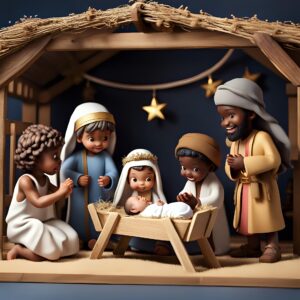
Only Matthew tells us the story of the wise men. The manger is a hot spot in our Christmas as we pack all the characters into a single one-act drama.
We are like Scripture readers of Luke 2:16 – “so they went with haste and found Mary and Joseph and the child lying in the manger.” Without pausing after Joseph, the reader places Mary and Joseph and the child in the manger. Slow down. Let the story come to you.
Tradition says there were 3 wise men because there are 3 gifts, but there may have been more. We could use more “wise” men and women. There’s a story that if there had been 3 wise women, they wouldn’t have gotten lost. Remember men have history: “Abram went out, not knowing where he was going.”
Wisdom is not high on the priority list these days. Wealth matters more than wisdom in America. This is so odd since Scripture magnifies the virtue of wisdom and condemns wealth repeatedly. If you are wealthy and read the Bible, you know you have a problem.
Anyone ever watching a children’s Christmas pageant of the manger scene knows how adult imaginations can fill those mangers with all kinds of characters and animals. I’ve seen a manger scene at the mall with Santa Claus bringing gifts to Jesus. In the Christmas movie, Love Actually, there is a first lobster. Mom asks her daughter, “There was more than one lobster present at the birth of Jesus? Her daughter’s response: “Duh?”
The shepherds came to the manger in Bethlehem; the wise men came to the house in Nazareth. Remember they were lost for a long time. Matthew says, “On entering the house, they saw the child with Mary his mother, and they knelt down and paid him homage.”
My all time favorite Christmas pageant story is the one where 3 little boys play the wise men. They had short parts. The first says, “I bring you gold.” The second: “I bring you myrrh.” The third forgot his line. Long silence. Then he blurted, “Frank sent this.”
Matthew’s gospel is written from a “Jewish” perspective. Matthew was written somewhere between the late 60’s to 85 A.D. I believe it was written after the destruction of Jerusalem in A. D. 70 and the author was a Jewish Christian refugee from the Roman destruction. The most likely place is Antioch as the home of our Matthew. Antioch – the place where we were first called Christians – is as fine a place for the writing of a gospel as any.
The author has a strong knowledge of Hebrew Scripture. Matthew 13:52 is the Matthean ideal. “Therefore every scribe who has become a disciple in the kingdom of heaven is like the master of a household who brings out of his treasure what is new and what is old.” Matthew takes the form of the Jewish “Halakah” = “the way to walk.” Matthew is the Christian Halakah. His gospel teaches the disciples of Jesus the way to walk, the way to live. The centerpiece of his teaching: The Sermon on the Mount. And it begins with the baby in the manger.
After the majesty and glory of Christmas, the high and holy moment of peace on earth and a Savior is given, the holy trio, Mary, Joseph and the baby are on the run. Like Israel leaving home, they flee to Egypt.
“Flee” suggests fear. It means to run away from danger. It’s the biggest word in our text. We are familiar with flight or fight. But sometimes the enemy is too powerful, the circumstances too overwhelming for any response other than “flee.”
Humanity has been “fleeing” since the dawn of walking on two legs. Hunger, persecution, war, genocide, famine, flood, violence, destruction. People on the move. Massive numbers of refugees. We are a nation of migrants, refugees, and immigrants. Don’t fall for the racist claim of white people being “settlers” and not immigrants. Ours is a immigrating world always looking for a promised land. Much of our human history is one of dehumanizing.
And a primary story of Christianity is Joseph, Mary, and Jesus “fleeing” the murderous rage of Herod.
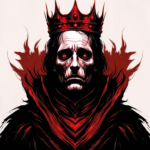
Herod’s seat of power is Jerusalem. He’s not much of a king, a cipher in history really, but he has power to destroy Jesus. Herod represents the kind of authoritarian leader who instills fear in people and causes them to tremble. Herod projects insecurity, fear, and paranoia onto people. The primary example in Scripture of this abhorrent behavior: Pharaoh. In Exodus 1:16 we read Pharoah’s executive order: “When you act as midwives to the Hebrew women and see them on the birthstool, if it is a son, kill him, but if it is a daughter, she shall live.”
In his fear and paranoia, Pharaoh resolves to destroy the children of the slaves, the next generation of his free labor. After driving the Hebrews to exhaustion with his exploitative and inhumane work demands, Pharaoh orders his soldiers to kill all the baby boys.
The one with the most, the richest and most powerful man on earth is the one most afraid and irrational. His methods contradict his own stated needs. Unrestrained power always acts in these cruel ways. I’m am sure you don’t need me to draw you a contemporary picture of this kind of behavior. One should always be leery of leaders whose every word contains braggadocio, condemnation of others, and fear.
Joseph does what any dad would do. “Then Joseph got up, took the child and his mother by night, and went to Egypt. “ A father protects his children.
Joseph, Mary and Jesus “stayed in Egypt” until Herod died. Matthew reaches into his Hebrew scripture: “This was to fulfill what had been spoken by the Lord through the prophet, “Out of Egypt I have called my son.”
What happens next in the story is so horrific, we want to skip over the passage. A lay reader once insisted, “I’m not reading this story in worship.” This doesn’t sound like Christmas. Have you ever thought about how Christmas can be a horror for so many millions of people?
“When Herod saw that he had been tricked by the magi, he was infuriated, and he sent and killed all the children in and around Bethlehem who were two years old or under, according to the time that he had learned from the magi.” Irrational misuse of power has never looked so bad. “Kill them all.” Can you imagine an American leader overreacting with rage over being tricked, or stopped in his tracks from doing what he wanted?
Have you ever had a Christmas interrupted by horror and death? Matthew thinks of Ramah: Then what had been spoken through the prophet Jeremiah was fulfilled: “A voice was heard in Ramah, wailing and loud lamentation, Rachel weeping for her children; she refused to be consoled, because they are no more.”
How many refugees in our country, even with green cards, spent Christmas in fear?
When Herod finally died, the coast was clear for Joseph to take his family home. An angel told Joseph: “Get up, take the child and his mother, and go to the land of Israel, for those who were seeking the child’s life are dead.”
Those seeking to destroy may take a temporary timeout, but there are always those who take away life, liberty, and happiness. Kenneth Burke famously said in 1939 we must always pay attention to a medicine man peddling poison so we can prevent one coming to the USA.
We see how Joseph couldn’t let down his guard because Archelaus had replaced his father as king and Joseph believed him as bloodthirsty as Herod.
Joseph took his family to Nazareth and Matthew didn’t miss the Old Testament lesson:
“There he made his home in a town called Nazareth, so that what had been spoken through the prophets might be fulfilled, ‘He will be called a Nazarene.’”
Joseph made a home for Jesus. He opened a small business as a carpenter. Never forget Jospeh the protector of Jesus. He was no crusader; he was a carpenter, but he kept Jesus safe from Herod.
Matthew gave us this story to show us Jesus as triumphant over every Herod in the world. There, in the story’s beginning, is the panoramic truth of the cosmos, the cosmic battle between good and evil. There it is laid out in Matthew’s gospel at Jerusalem, Bethlehem, Ramah, and Nazareth. So sound the trumpet of God’s victory over violence, fear, and death. “Joy to the world, the Lord is come, let earth receive her king. Let every heart prepare him room, and heaven and nature sing.”