Pope Leo’s ‘evangelical’ encyclical
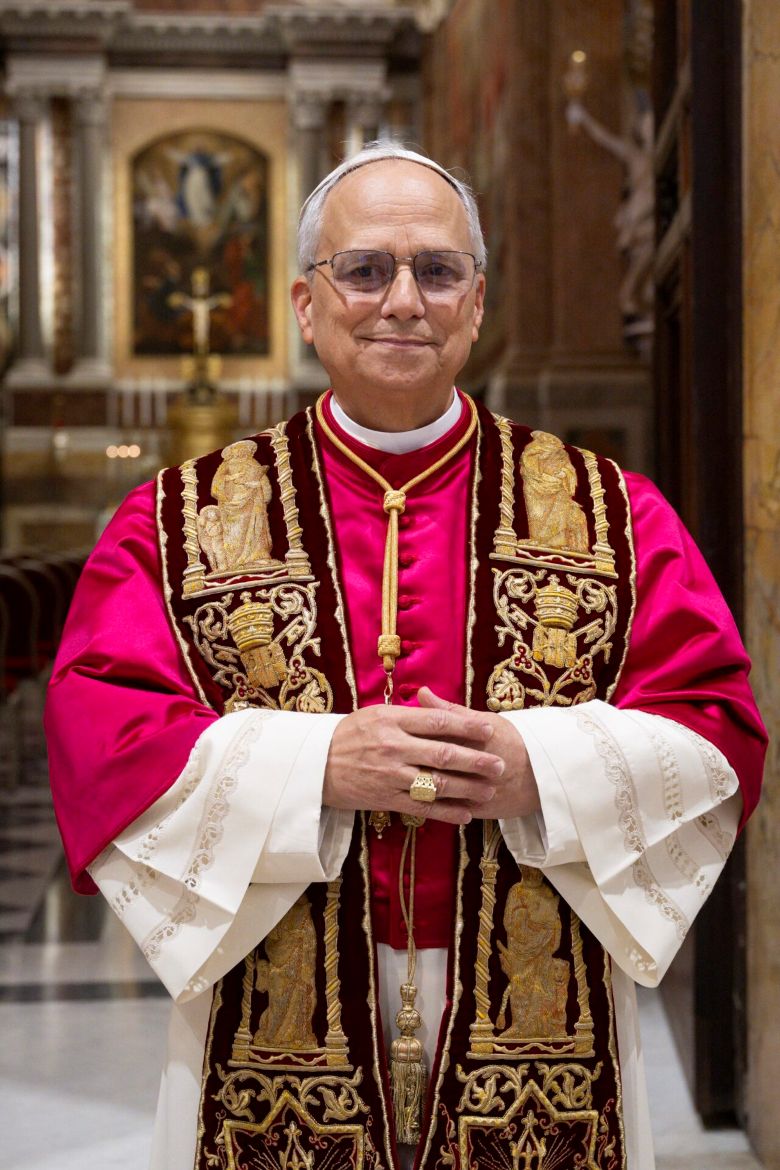
Pope Leo’s ‘evangelical’ encyclical
(Analysis Rodney Kennedy, this article appeared in Baptist News Global on May 28, 2026)
I read Pope Leo’s papal encyclical, “Magnifica Humanitas: On Safeguarding the Human Person In the Time of Artificial Intelligence.” Imagine my surprise in finding an “evangelical” Catholic diametrically opposite American MAGA evangelicals.
What captured my attention was the first third of the letter where Pope Leo elucidates the social teaching of the Roman Catholic Church. This prelude to his warnings against technology almost seemed out of place. On reflection, I realized Leo needed to set the stage for assailing the citadels of American idolatry of wealth, technology and hubris.
Matthew Walther, editor of The Lamp, a Catholic literary journal, expressed disappointment in the pope’s views in a New York Times editorial, “The Pope Should Be Going to War Against A.I. Why Isn’t He?”
Silicon Valley shrugged at Leo’s document. The deeply secular nature of American faith was evident in the response of Jeremy Nixon, a well-connected figure in the Bay Area’s frenetic AI scene. Nixon said the papal encyclical might mean something to the world’s Catholics, but he doubted it would have an effect on Silicon Valley.
Nixon opined: “It did not seem like the church had thought deeply about what their independent perspective was on AI. It is not clear they could do that even if they tried. … They couldn’t have a position on it, because they don’t understand it.”
Biblical tropes
The preacher in me affirmed Leo’s use of a pair of biblical tropes: The Tower of Babel and the rebuilding of Jerusalem by Nehemiah.
“The preacher in me affirmed Leo’s use of a pair of biblical tropes.”
The epistle begins with the vivid image of the Tower of Babel, the greatest biblical symbol of humanity ‘s most definable hubris, the desire to be gods. Leo defines the issue: “Humanity, created by God in all its grandeur, is today facing a pivotal choice: either to construct a new Tower of Babel or to build the city in which God and humanity dwell together.”
Leo sees the Tower of Babel as a symbol of our reach for the heavens through technology. He says, “It was an impressive feat: a single language, a single technology, a single direction. However, the project concealed a profound danger. It was a project conceived without reference to God, supported by a uniformity that eliminated diversity and that chose homogenization over communion.”
He then offers Nehemiah’s rebuilding of Jerusalem as the better option: “Thus, ancient Jerusalem rediscovers a common language — not one of uniformity, but one of communion, namely the harmony that arises when all persons assume their own role and recognize that their strength comes from the Lord.”
The social principles of the Catholic Church
Leo does a historical review to demonstrate the unbroken witness of the church to the social nature of the gospel. My Protestant ears picked up echoes of Walter Rauschenbusch, Washington Gladden and John Howard Yoder, especially Yoder’s The Politics of Jesus.
Dedicating his first encyclical to social justice would show how much Leo attempts to move Catholicism away from the near fixation on “pelvic theology,” or sexual morality, that has come to define Catholicism, especially in the United States.
The pope lists the principles of social doctrine, principles capable of breaking up any MAGA evangelical prayer meeting:
The common good
The universal destination of social goods
Subsidiarity — “Higher-level institutions must recognize, protect and promote the freedom and creativity of lower-level entities, coordinating their contributions so that they can cooperate effectively for the common good.”
Solidarity
Social justice — “A litmus test for social justice today is the treatment of migrants, refugees and those forced to move due to poverty, violence, climate change and environmental disasters. The way a society treats them reveals whether its sense of justice is driven by fear or by the spirit of fraternity.”
An ‘evangelical’ faith
I believe Pope Leo offers an apologia for genuine, gospel evangelical faith. The irony of a Catholic Pope articulating the meaning of “evangelical” in opposition to American evangelicals should not go unnoticed.
“The irony of a Catholic Pope articulating the meaning of ‘evangelical’ in opposition to American evangelicals should not go unnoticed.”
In “Magnifica Humanitas,” Leo uses the word “evangelical” six times.
He offers a viable alternative to the current form of the evangelical church in America — a church bent on Trumpian revenge, deportation of immigrants, anger, a culture war and authoritarian impulses.
He reforms the word “evangelical.” This is a much needed reformation as valid as Martin Luther’s given how many American evangelicals have turned “hard hearts” to empathy.
An evangelical language
Leo rejects authoritarian languages of certainty with all their hyperbole, lies, incoherent claims and threats. He says: “Building the common good requires an evangelical language. We must avoid humiliating or antagonistic words, opting rather for a clarity that sheds light and a frankness that unlocks new possibilities. We cannot condone naïve enthusiasms, nor fuel unfounded fears. Instead, let us establish standards for discernment — the dignity of the human person, the universal destination of goods, the preferential option for the poor, care for our common home and peace — and let us translate these standards into practices such as responsible planning, the assessment of human and social impact, the inclusion of the most vulnerable, the promotion of digital literacy and guiding research and industry toward justice and peace.”
An evangelical charity
American evangelicals have abandoned charity for those they despise and those with whom they disagree. Other Christians are not “brothers and sisters in Christ,” but enemies.
“American evangelicals have abandoned charity for those they despise and those with whom they disagree.”
Leo observes, “The mission entrusted to the church … stems from evangelical charity, which impels the church to draw near to the wounds of humanity whenever they surface with greater severity. When the church intervenes, she does so following the example of the Good Samaritan, with discretion and closeness, aware that what arises from urgent necessity cannot become the norm, nor replace the institutional responsibilities proper to the civil community.”
An evangelical witness
Leo goes against the grain of our present political uniformity and insistence on complete loyalty by insisting the church develop “new forms of evangelical witness in public life” while listening to the “many voices” of all people.
He insists, “Listening to the ‘many voices’ is no mere sociological exercise, but instead requires spiritual discernment. Guided by the Spirit, the people of God come to recognize in cultural and social transformations both the signs of the presence of Christ, who comes and guides history toward its fulfilment, and those aberrations that obscure his face.”
An evangelical understanding
Leo seeks a commensality among the faithful. He claims the principles of social teaching will sustain an evangelical understanding. What a breath of fresh air in our polluted climate of divisive, hateful, harsh and violent rhetoric aimed at so many others.
In Leo’s view, an evangelical understanding is the “proper function of Social Doctrine, which does not claim to supplant the responsibilities of politics or institutions, but offers itself as a foundation for collective discernment, helping to recognize and promote whatever serves the dignity of persons, the vitality of communities and the common good.”
Try imagining this in the job description of an ICE agent.
An evangelical approach
“Leo offers an evangelical approach where the church uses persuasion, not coercion.”
Leo offers an evangelical approach where the church uses persuasion, not coercion. He warns the church of the temptation of seeking forms of status based on secular power. As Stanley Hauerwas notes, “The church is constantly tempted to imitate the false politics of the world for its own life.”
Pope Leo rejects the coercive methods of American evangelicals in favor of “the evangelical approach of a gentle proclamation of truth that is not imposed.” According to Leo, the church “does not claim to possess a monopoly on truth, because truth is not a territory to be defended, but a good to be shared.”
An evangelical freedom
Leo almost sounds Baptist when he says the church values charisms and skills and avoids any form of paternalism that suffocates evangelical freedom.
The social principle undergirding evangelical freedom for Leo is subsidiarity. He calls it “the guiding principle for governance and pastoral life.” The word means the principle that a central authority should have a subsidiary function, performing only those tasks which cannot be performed at a more local level.
I believe Pope Leo accomplished his goals of telling the world “God is God and we are not” and the church’s one task is to be the church. As a faithful church, we have the power to teach the world how to be the world as we guard humanistic values over technology.
Recent Articles/Essays











About the Author